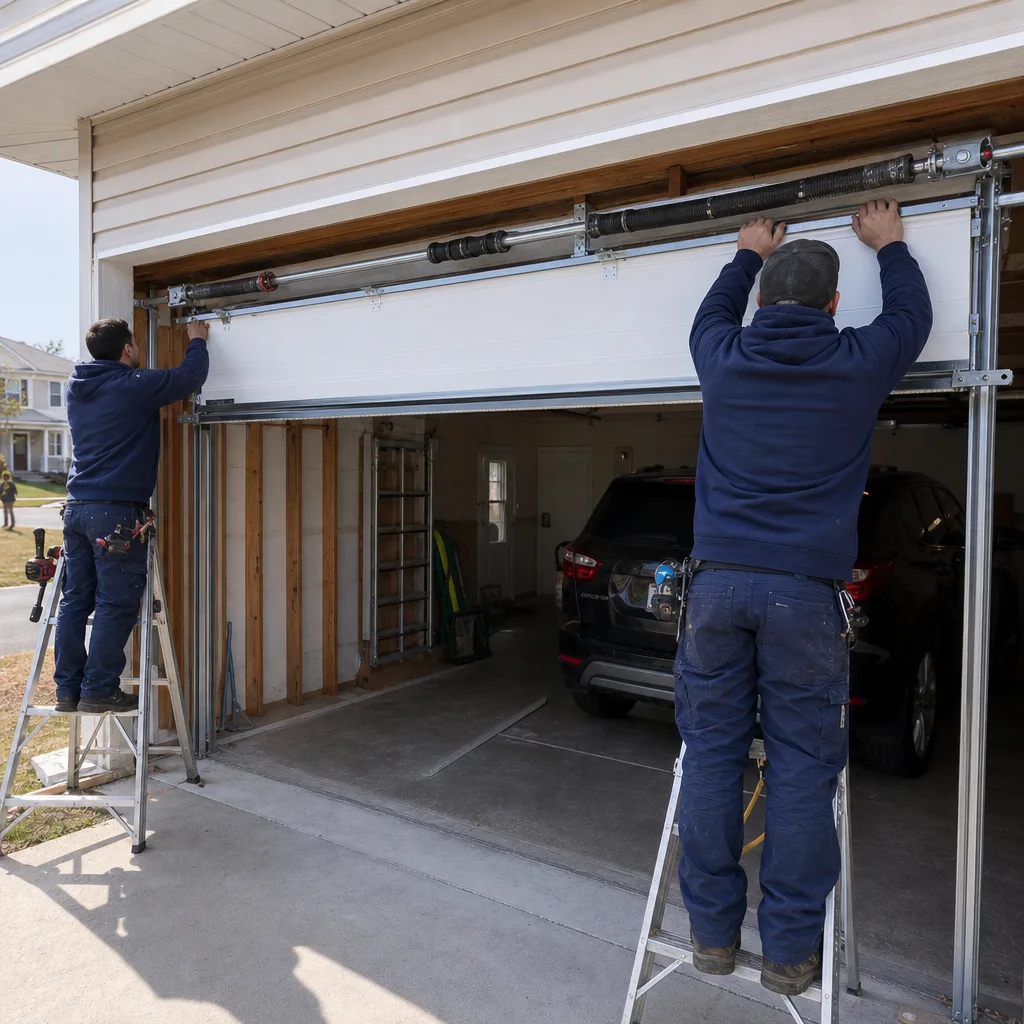
Last updated November 21, 2026
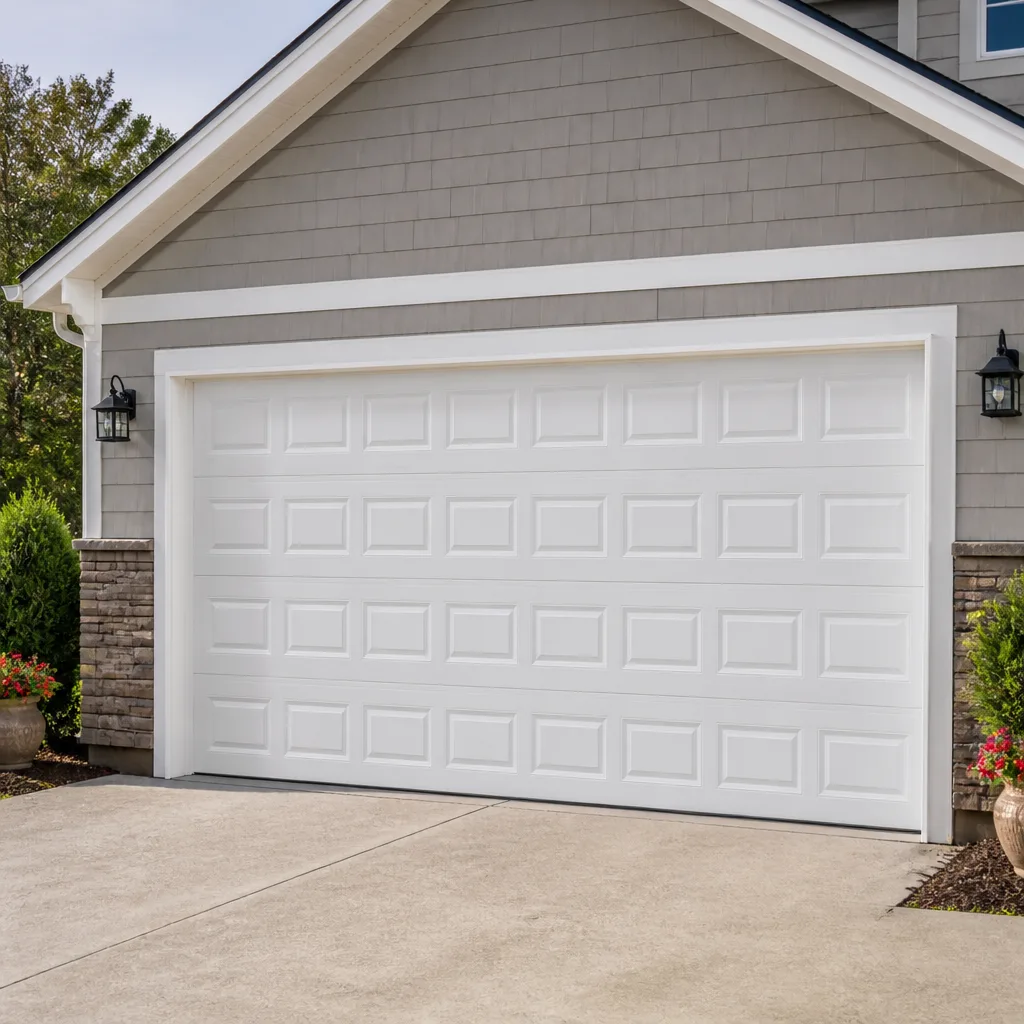 Raised-panel steel
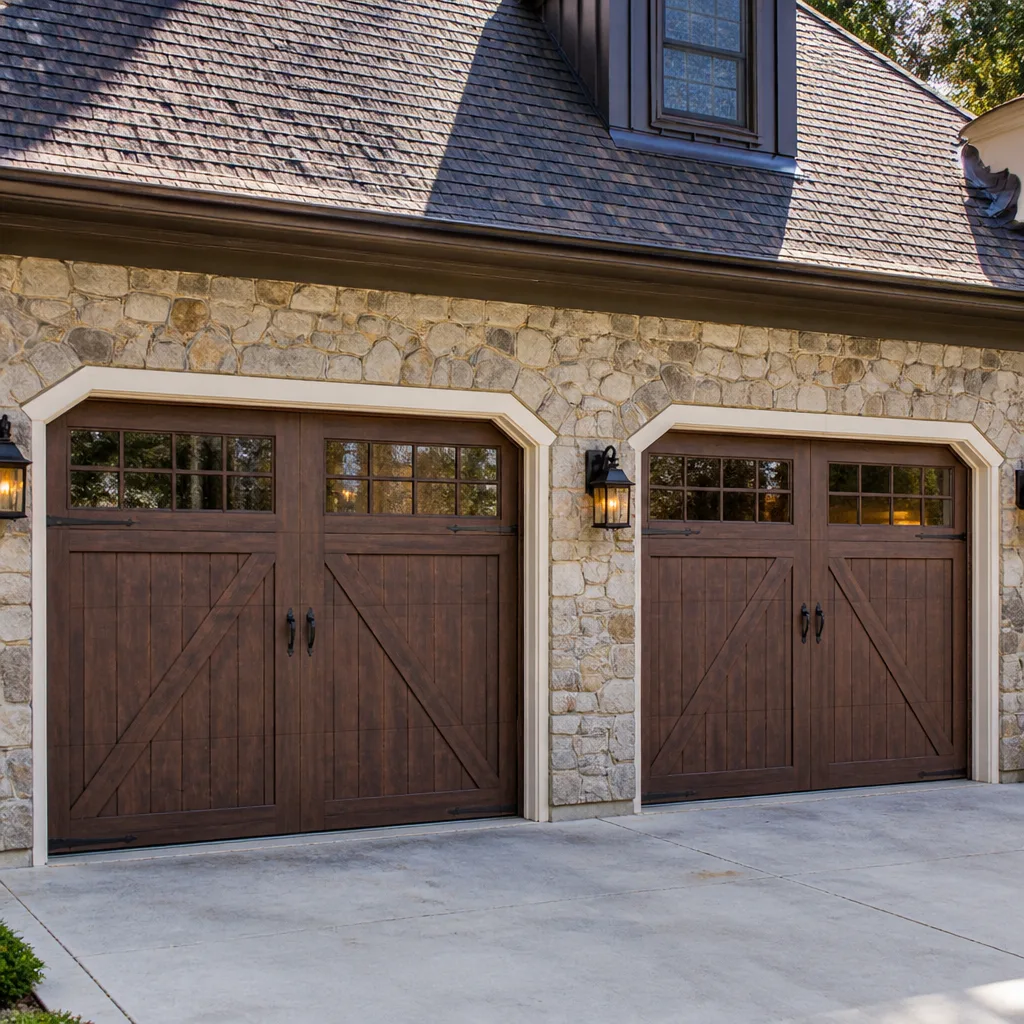 Carriage house
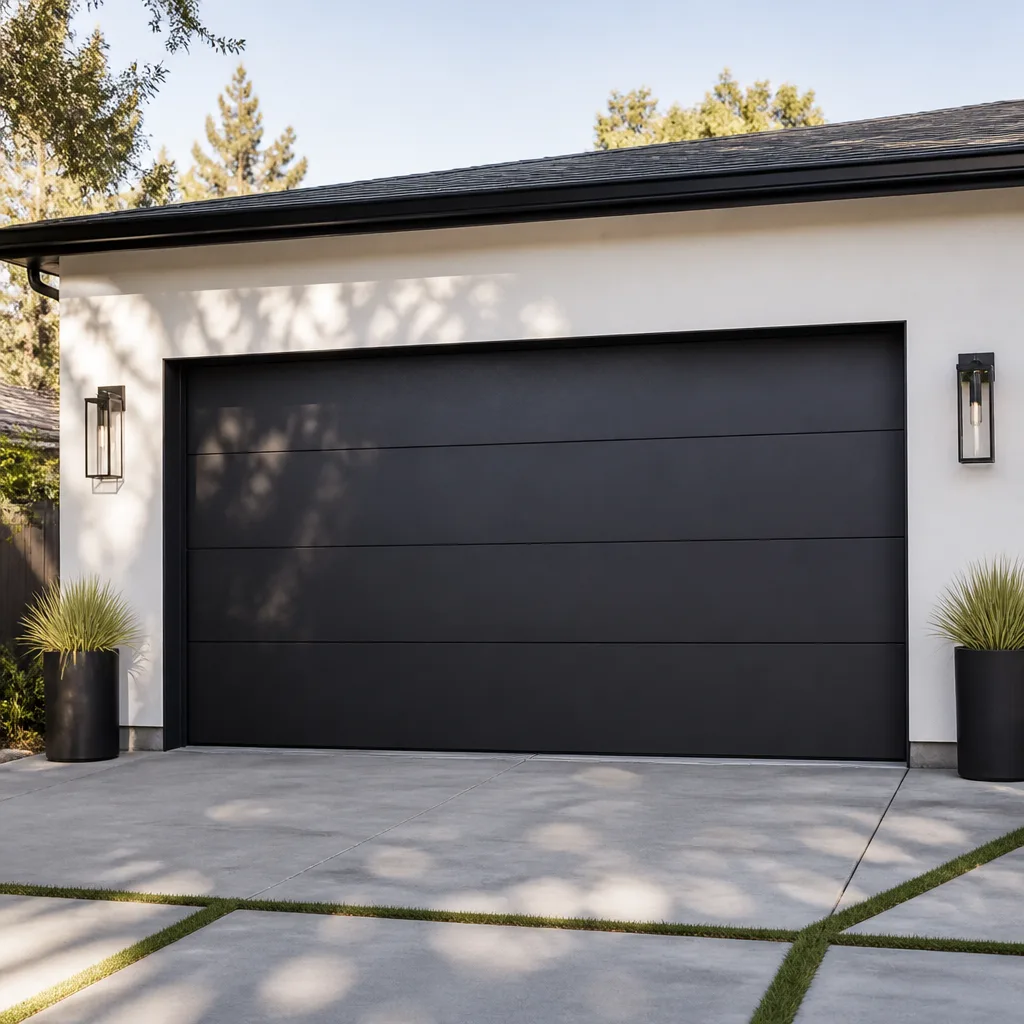 Modern flush
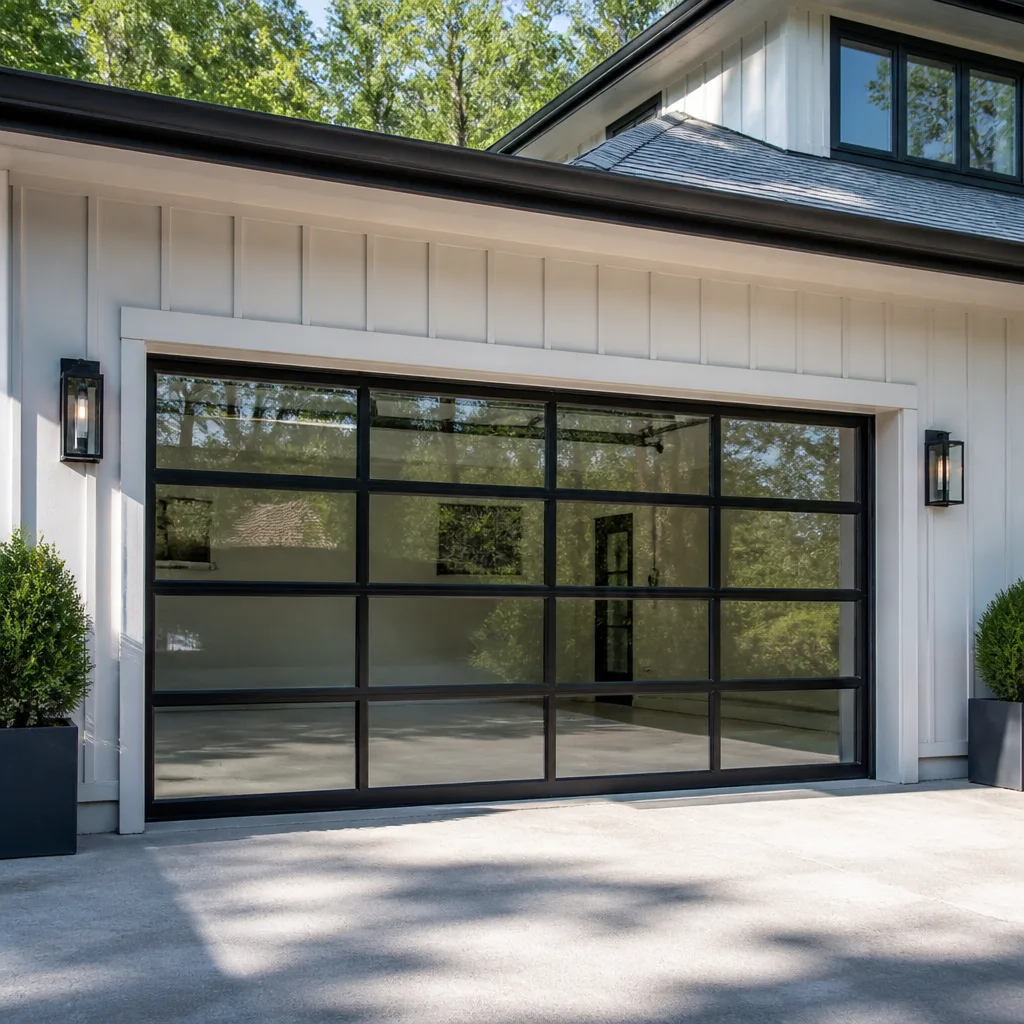 Full-view glass
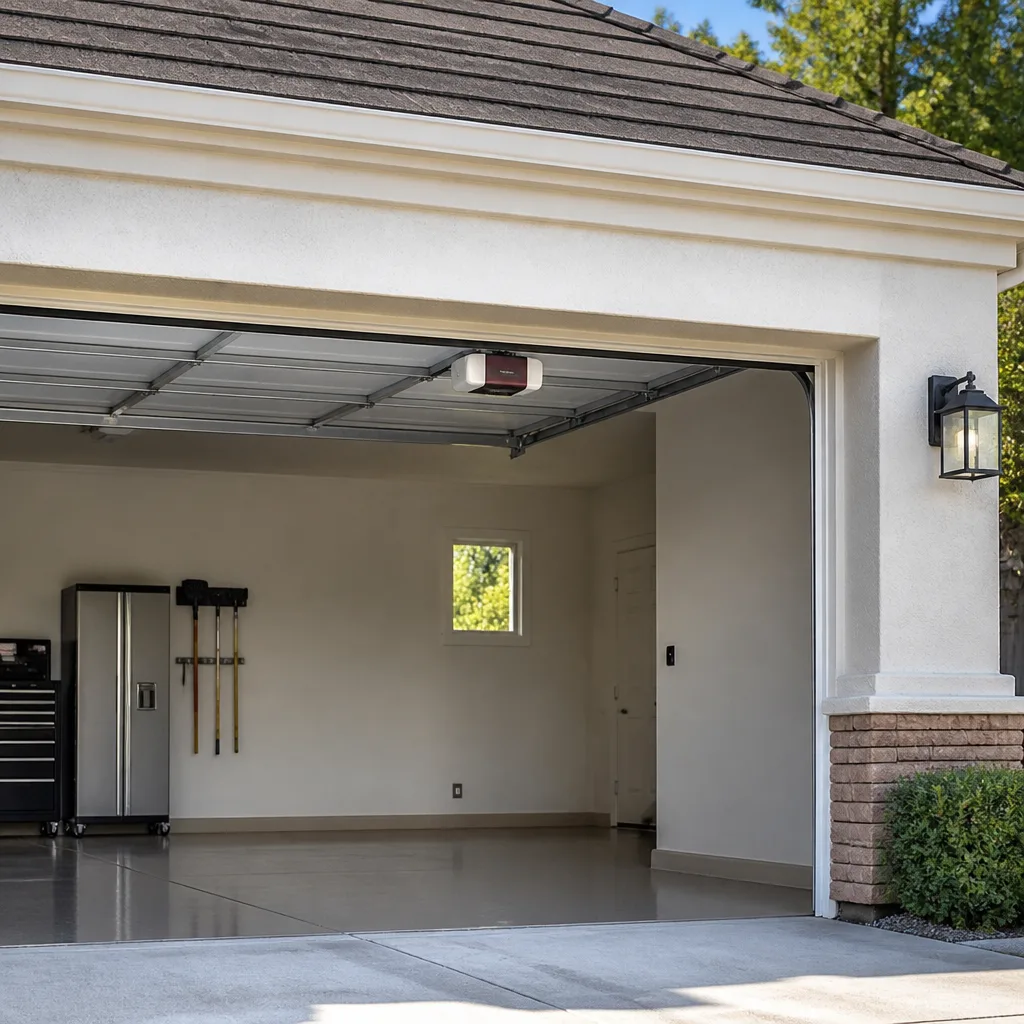 LiftMaster openers
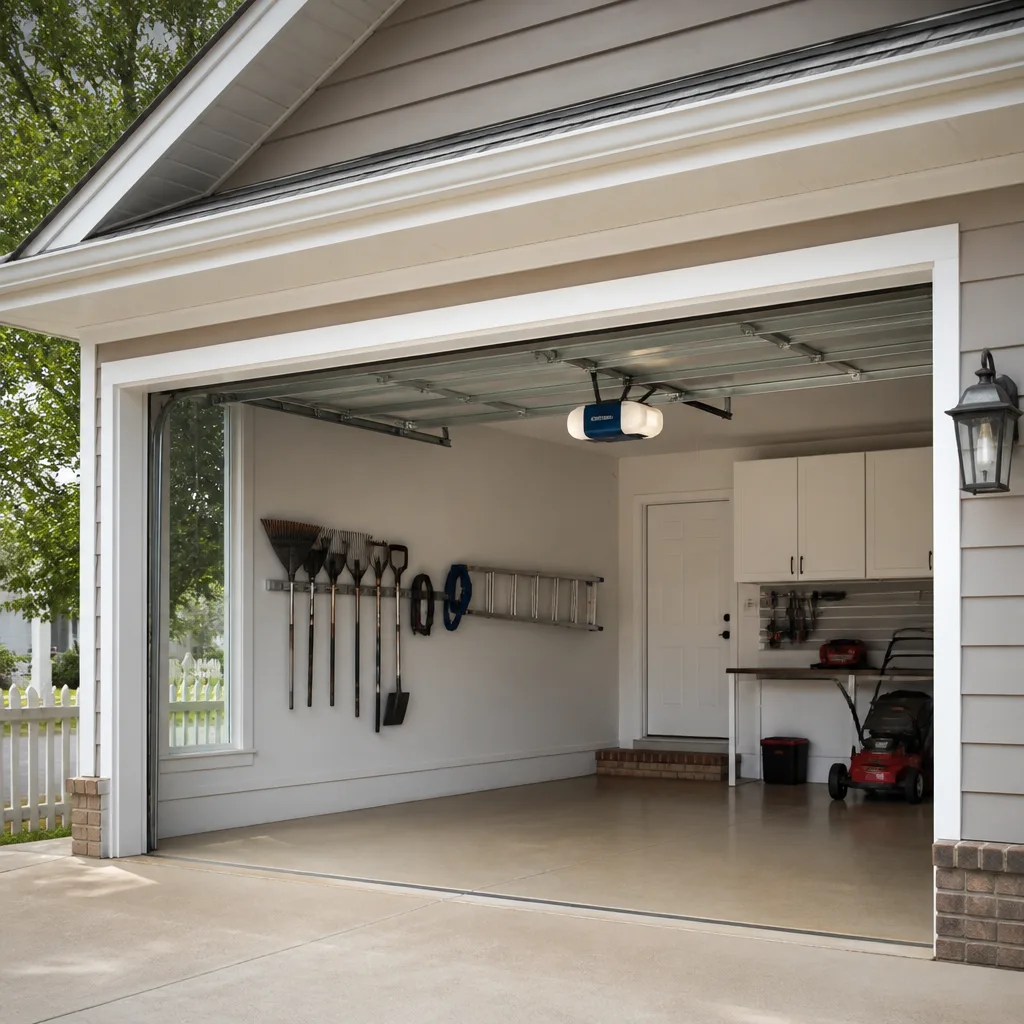 Chamberlain openers
Full 25-point door and opener safety check with every visit - springs, cables, rollers, tracks, and your LiftMaster or Chamberlain opener included
You get a price before we start. It does not change when the pro arrives.
Get your free estimateGarage Door Warning Signs: A Mount Laurel Homeowner’s Reference Guide
Here’s what surprises most homeowners we talk to: a garage door almost never fails without warning. The spring that snaps, the cable that lets go, the door that comes down crooked – each one announces itself first, often for weeks. The trick is knowing which sounds and movements are harmless quirks and which are the last stage before a dangerous failure. A torsion spring under full tension stores roughly 100 foot-pounds of torque, and that stored energy is exactly why the warning signs before it breaks are worth learning. “It just broke suddenly” almost never tells the full story. In this guide, we’ll walk through a tiered system for reading your door, from Mount Laurel homes on quiet suburban streets to busier spots near the Moorestown line, so you can tell when to watch, when to schedule, and when to stop using the door entirely.
Quick Answer
A garage door gives warning before it fails: unusual noises, uneven travel, a door that won’t stay up, visible cable fraying, and gaps in the spring coil are the signals that matter most. Green signs mean monitor the door, yellow signs mean schedule service, and red signs – a door stuck halfway, a snapped spring, a hanging cable, or a door you can lift by hand – mean stop operating it until a technician inspects it. In Mount Laurel, the freeze-thaw swings of a New Jersey winter tend to accelerate wear on springs, tracks, and rollers, so a quick 90-second check a few times a year catches most problems early.
Styles & brands we work with
- Raised-panel steel
- Carriage house
- Modern flush
- Full-view glass
- LiftMaster openers
- Chamberlain openers
Table of Contents
- The Three-Tier Warning System: Green, Yellow, Red
- What the Sounds Are Telling You
- Why an Uneven Door Is Usually a Cable or Spring Problem
- The 90-Second Visual Inspection
- The Two Signs That Mean Stop Using the Door
- Mount Laurel’s Seasonal Wear Patterns
- Is It the Opener or the Door?
- When to Call a Professional
The Three-Tier Warning System: Green, Yellow, Red
The single most useful thing you can do for your garage door is stop lumping every odd noise and wobble into the same mental bucket. Some things are cosmetic. Some mean “book a repair in the next couple of weeks.” And some mean the door is genuinely dangerous to keep running. That’s why we sort warning signs into three tiers, and why this is the framework we return to again and again for Mount Laurel homeowners.
Green: Monitor
- A faint squeak or squeal as the door moves – usually dry rollers or hinges.
- A slight rattle on opening or closing that isn’t getting worse week to week.
- Light surface rust on hinges or the bottom bracket in a wet winter.
- The door hesitating for half a second before it reverses back up.
Green signs are your cue to keep an eye on things, not to panic. Note them, check again in a few weeks, and mention them when you next have the door serviced.
Yellow: Schedule Service
- Loud grinding, scraping, or a rhythmic thumping that has gotten more noticeable.
- The door moves at inconsistent speed, or reverses without an obvious obstacle.
- An opener that strains to lift the door, or a light that blinks instead of working.
- Visible cable fraying at the drum or near the bottom bracket.
Yellow signs mean a component is wearing and should be looked at soon – before it becomes a red.
Red: Stop Using the Door
- A snapped spring (you’ll see a clear gap in the coil).
- A cable that has come off the drum or is hanging slack.
- The door stuck open or stuck halfway and won’t move with the opener.
- The door is so heavy you can lift it by hand, or so weak it drops on its own.
- Rollers popped out of the track or a visibly bent track.
Red signs mean the door is unsafe to operate automatically or manually until someone qualified inspects it. That’s the point where you pick up the phone rather than the garage remote.
What the Sounds Are Telling You
Garage doors are essentially a chorus of moving metal parts, and each part fails with a different voice. Learning the difference between a fraying cable, a failing roller, and a misaligned track will save you money and a lot of guessing.
The Fraying Cable: A Sharp, Metallic Whine or Pop
A cable that’s starting to fail often makes a metallic twang or a high whine at the drum end. It can sound like a single sharp snap that repeats each cycle, or a light grinding noise near the top of the door. On a visual check, look for individual strands poking out of the cable or a kink near the drum. A frayed cable is yellow – book it before it snaps.
The Failing Roller: A Rhythmic Squeal or Rattle
Rollers are the small wheels that ride inside the track. When the bearings wear or the roller flattens, you’ll hear a steady squeal or a rattle that repeats with every revolution. It’s usually the easiest of the three to live with – until the roller seizes and starts dragging on the track. This is often green or low yellow.
The Misaligned Track: A Scrape or a Bump
A bent or out-of-line track produces a scrape as the door brushes it, or a sharp bump as the roller hits the kink. You can often see the misalignment from the ground – the track should look straight when you sight down it. A track scrape is yellow to red depending on severity.
The Spring: A Loud Bang and Then Silence
When a torsion spring finally lets go, it’s a genuinely alarming bang, followed by a door that suddenly feels dead. That’s a red sign, and it’s the one we most often get called about. Because it’s the hardest to hear coming, catching it early means recognizing the earlier signs – a door that’s gotten heavier, slower, or won’t stay up when you let go of the handle.
Why an Uneven Door Is Usually a Cable or Spring Problem
When a door rises crooked or one side lags behind the other, homeowners very reasonably blame the opener. It’s the box that seems to “push” the door, so it must be the culprit. In practice, an uneven door is almost always a sign of a cable or spring that’s out of balance – and replacing the opener when the problem is the door wastes money and leaves the real issue in place.
Here’s how the parts work together. The springs (torsion or extension) do the heavy lifting. The cables carry that tension to the bottom corners of the door. If the door is uneven, one side has lost tension or the other side has gained it – a symptom of a cable running off its drum or a spring that’s weakened. The opener is just trying to move whatever weight it’s given. That’s the same reason we always diagnose before we replace: misdiagnosing a cable problem as an opener failure means the new opener works its tail off trying to lift a door it was never sized for.
Quick way to tell
- Disconnect the opener (pull the red release cord on the track).
- Lift the door halfway by hand. It should feel manageable, and it should stay where you leave it.
- If it drops on one side, feels far too heavy, or won’t stay put, the issue is in the door’s balance – springs and cables – not the opener.
If you’re not comfortable lifting the door by hand, don’t. Call a trained professional instead. A spring under tension is not something to experiment with.
The 90-Second Visual Inspection
You don’t need to get on a ladder or touch anything dangerous to catch most early problems. A quick walk-around from the ground, done every few months, covers the most important visible wear indicators. Here’s the routine we suggest for Mount Laurel homes.
- Stand inside and look at the door closed. Do you see daylight through gaps? A straight door should look even at the bottom edge and on both sides.
- Sight down both vertical tracks. They should look straight and parallel. A clear kink or bow is a warning.
- Look at the torsion bar springs (above the door). A healthy spring should look uniform. A visible gap in the coil, or a winding cone that’s drifted, means the spring has broken or is failing.
- Inspect the cables at each corner. They should be tight and wrapped evenly on the drums. Look for fraying, kinks, or slack cable.
- Check the rollers. Look for cracked or flat wheels. A roller that’s worn flat is a roller that will soon fail.
- Test the door’s balance. Open it halfway, let go carefully, and see if it stays. A door that moves on its own is out of balance.
Everything on that list is safe to look at from the ground. Nothing on it involves touching the springs or cables – and it shouldn’t. What you’re doing is gathering evidence for a professional, not performing the surgery.
The Two Signs That Mean Stop Using the Door
Of all the warning signs, two carry the most weight. If you see either one, stop using the door – both automatic and manual – until a technician has been out. These are the ones where continuing to open and close the door could cause a serious injury or property damage.
Sign 1: A Snapped Spring or a Cable Off Its Drum
A gap in the spring coil or a cable that has clearly come free is a hard stop. The door may weigh 150 to 200 pounds or more, and without spring tension there’s nothing holding it up. If the door falls, it can come down on a car, a pet, or a person, and the spring and cable assemblies themselves are under enough tension that a sudden release can cut or strike anyone nearby. This is not a “close the door gently and wait” situation. Leave it down or as it is, don’t force it, and call for a technician.
Sign 2: A Door That Moves on Its Own or Lifts by Hand
If you can lift the door by hand with barely any effort, or if it starts to drop on its own once you let go, the springs have lost tension or failed altogether. The opener is now lifting a counterweight that isn’t there. Don’t run it. This is the “last stage before the dangerous failure” that people describe – the spring has already lost its tension, and the door is now held up by the opener, the tracks, or gravity.
Both signs are red on the tiered system, and both are reasons to call a trained technician. A torsion spring stores huge energy. The right response to a red sign isn’t a DIY attempt – it’s a phone call.
Mount Laurel’s Seasonal Wear Patterns
Mount Laurel sits in a region with real seasons, and that matters for your door. Hot, humid summers and cold winters with repeated freeze-thaw cycles put unique pressure on garage door components. The shifts we see most locally happen in two brackets: the first cold snap after a mild fall, and the first warm stretch in spring.
Winter and Freeze-Thaw
Metal contracts when it’s cold. Springs, cables, and tracks all tighten up, and a component that was already stressed can finally let go on the first really cold morning. Lubricants thicken and rollers drag. Doors that were functioning fine in October suddenly groan in January. A little preparation in late fall – getting rollers and hinges lubricated before the cold sets in – goes a long way.
Humidity and Heat
Summer humidity in northern New Jersey doesn’t just make you sweat. It swells wood door panels, softens lubricants, and can make hinges stiff. Wood panel doors in particular can warp enough to throw off the door’s balance. It’s a good time to check tracks and rollers.
Storm Season
We get significant wind and rainstorms in Mount Laurel, and sometimes impact from wind-blown debris rather than hail (hail is uncommon here). Impact damage – a dented panel, a bent track – is worth checking after any severe weather. A dented panel can also throw the door’s balance off if enough weight shifts.
Is It the Opener or the Door?
We’ve talked about the hidden danger of blaming the opener for the door’s problem. But sometimes it really is the opener, and knowing how to tell the difference saves time and money. Here’s how to read the signals from the box itself.
Signs the Opener Is the Problem
- The opener light blinks or flashes but the door won’t move – often a safety sensor issue.
- The opener runs but the door moves in fits and starts, or reverses immediately after closing.
- You hear the motor running but the door doesn’t move at all – a stripped gear or broken drive.
- Remote range has dropped or the wall button works but the remote doesn’t.
Signs the Door Is the Problem
- The door is uneven, heavy, or won’t stay up when lifted by hand.
- The opener is straining audibly to lift a door that should be easy.
- There are visible spring or cable issues.
If you’re not sure, the guidance is simple: get a diagnosis before you replace the opener. We work on the major opener brands, including LiftMaster, Chamberlain, and Genie, and we can’t count the number of times a homeowner was ready to replace a perfectly good opener when the real problem was a worn spring. If it turns out the opener is failing, or it’s simply old enough to be unreliable, we can talk about garage door opener repair or replacement. The right fix is the one the door actually needs.
Common Mistakes to Avoid
In our experience, most expensive garage door problems start with a small mistake – doing the wrong thing at the wrong moment. Here are the ones we see most often in Mount Laurel.
- Ignoring a yellow sign until it becomes a red one. A grinding sound that’s “annoying but still working” usually costs less to fix now than after a component fails. Waiting rarely makes the repair cheaper.
- Replacing the opener when the door is the problem. An uneven, heavy, or slow door almost always means a spring or cable issue, not a failing opener. Misdiagnosing it wastes money and leaves the real cause in place.
- Running the door after a snap or a cable comes off. A snapped spring or slack cable is a stop sign. Every cycle forces the opener to lift the door’s full weight, and operating it risks injury or damage.
- Letting a door sit unbalanced. A door that won’t stay open on its own should be taken out of service until it’s repaired. That includes that “it works fine as long as I don’t use it too much” door.
- Skipping the visual check after a storm. A dented panel or bent track may not show symptoms right away, but a warped door throws the whole mechanism out of alignment. A quick look after a big storm catches it early.
- Trying to adjust or replace springs yourself. This is the one piece of the job that genuinely requires specialized tools and training. It’s also the most dangerous. A torsion spring under tension can injure badly if it releases unexpectedly.
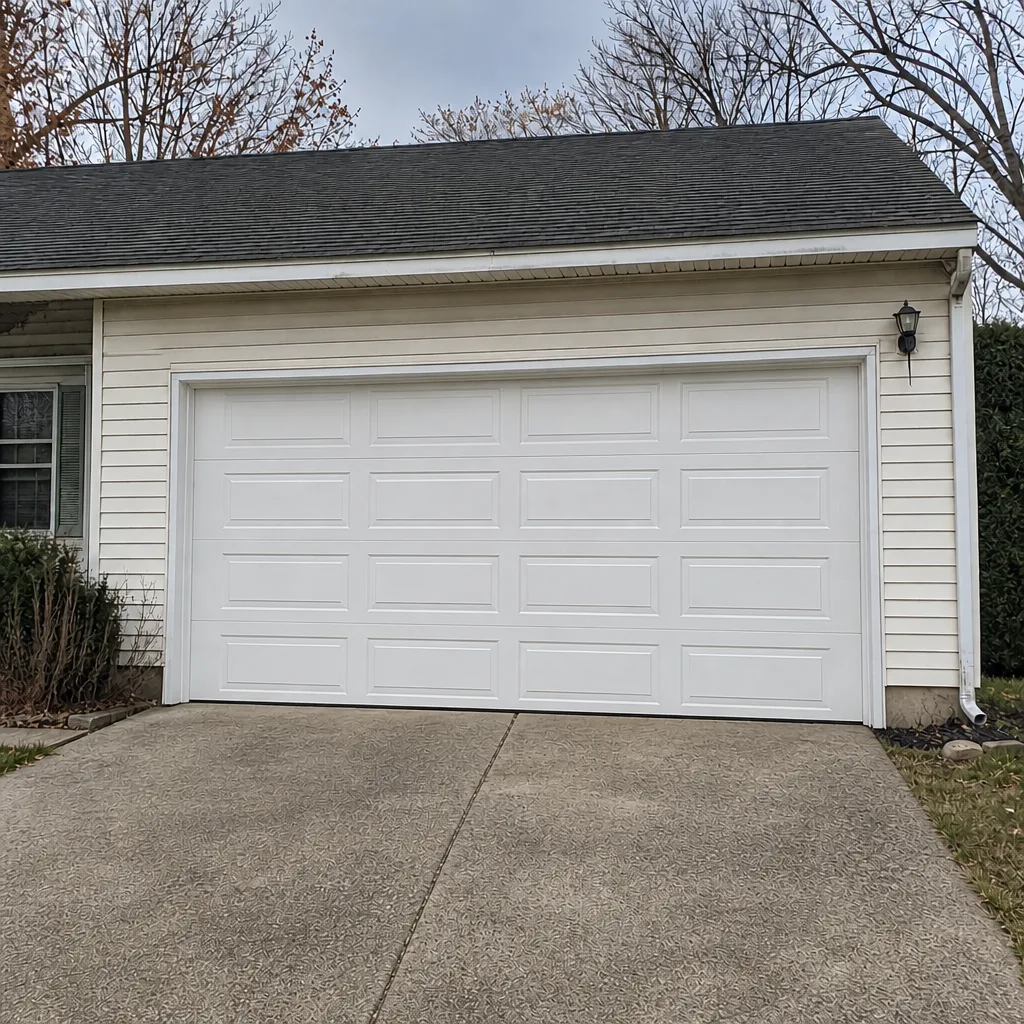
See the difference
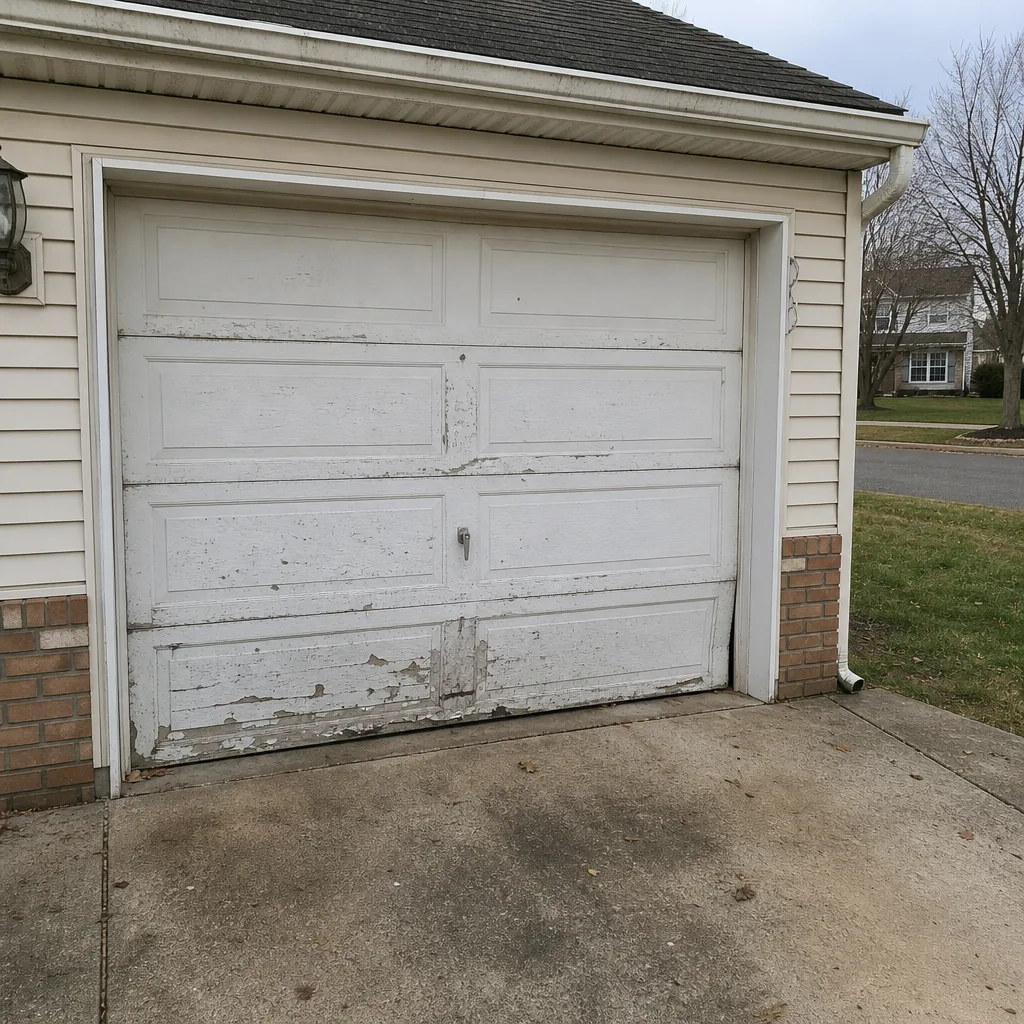 Before
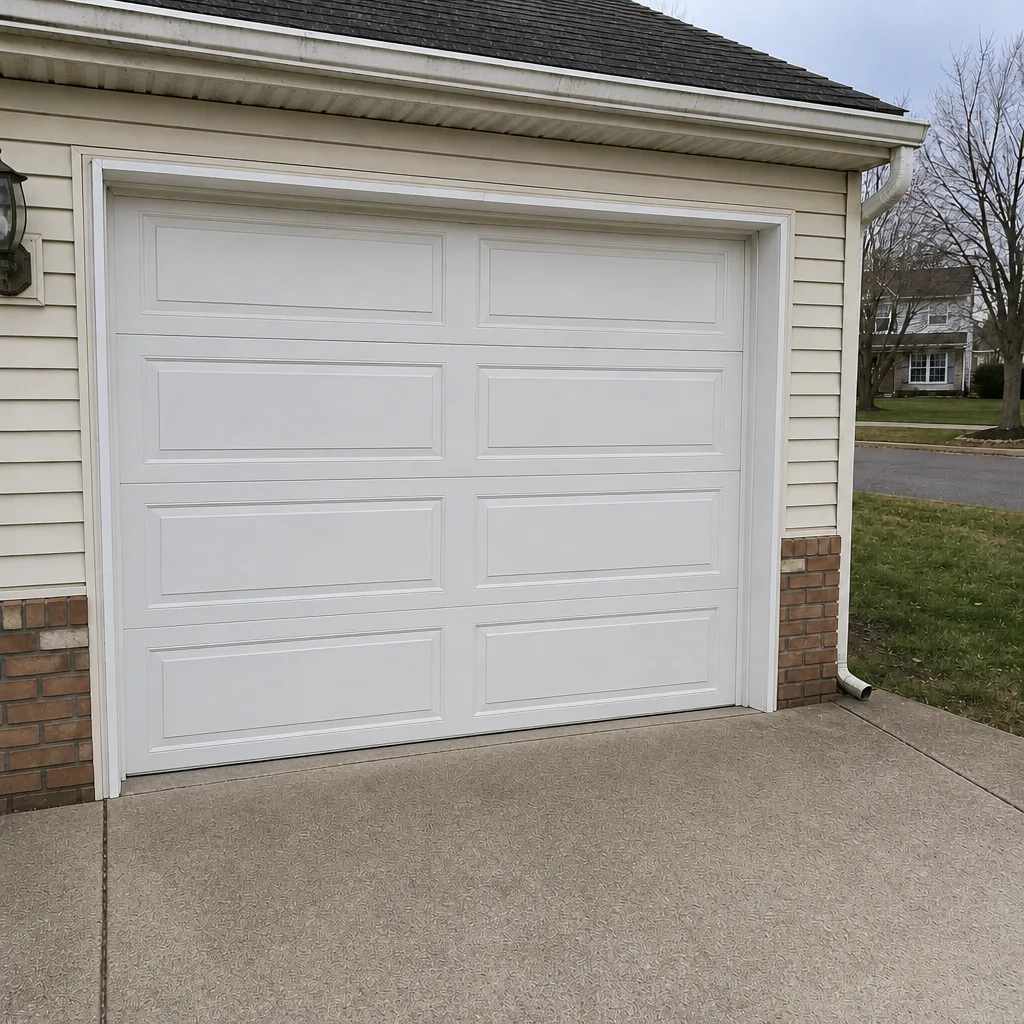 After
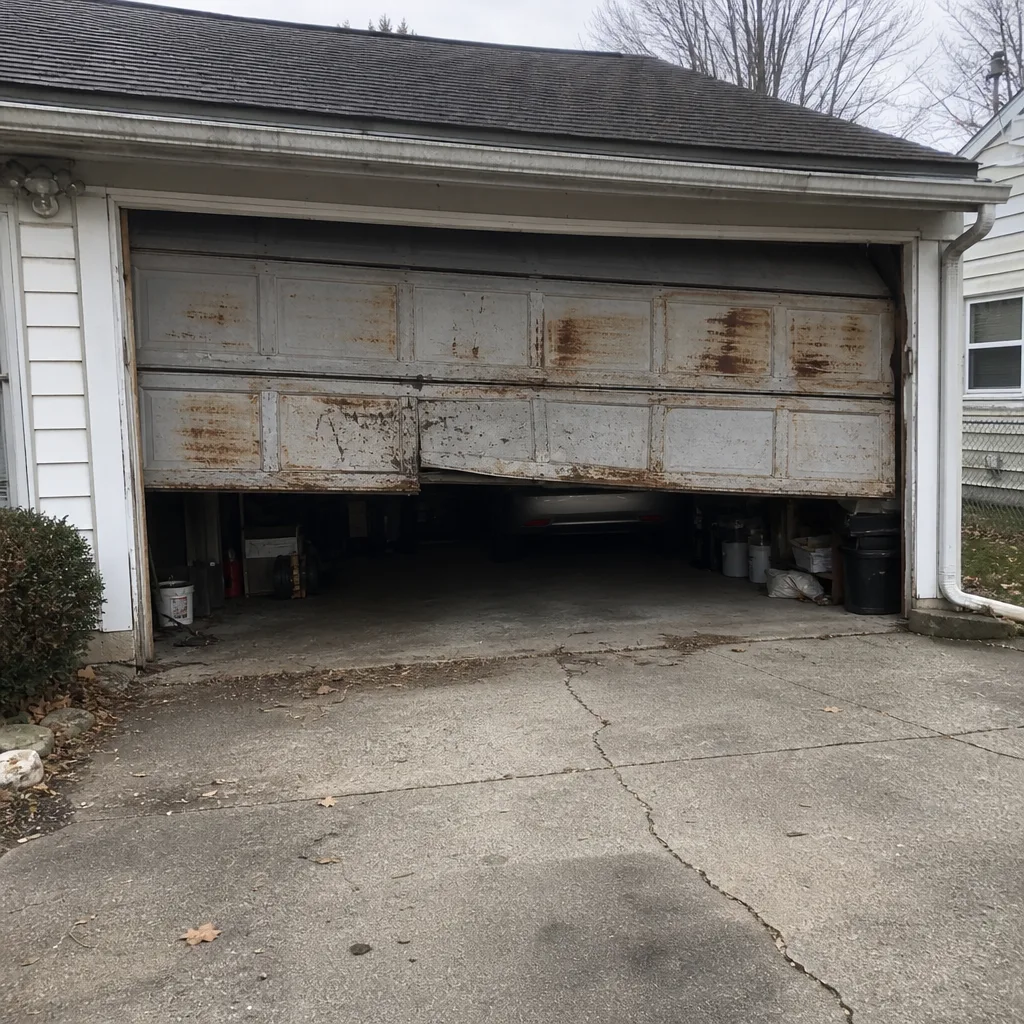 Before
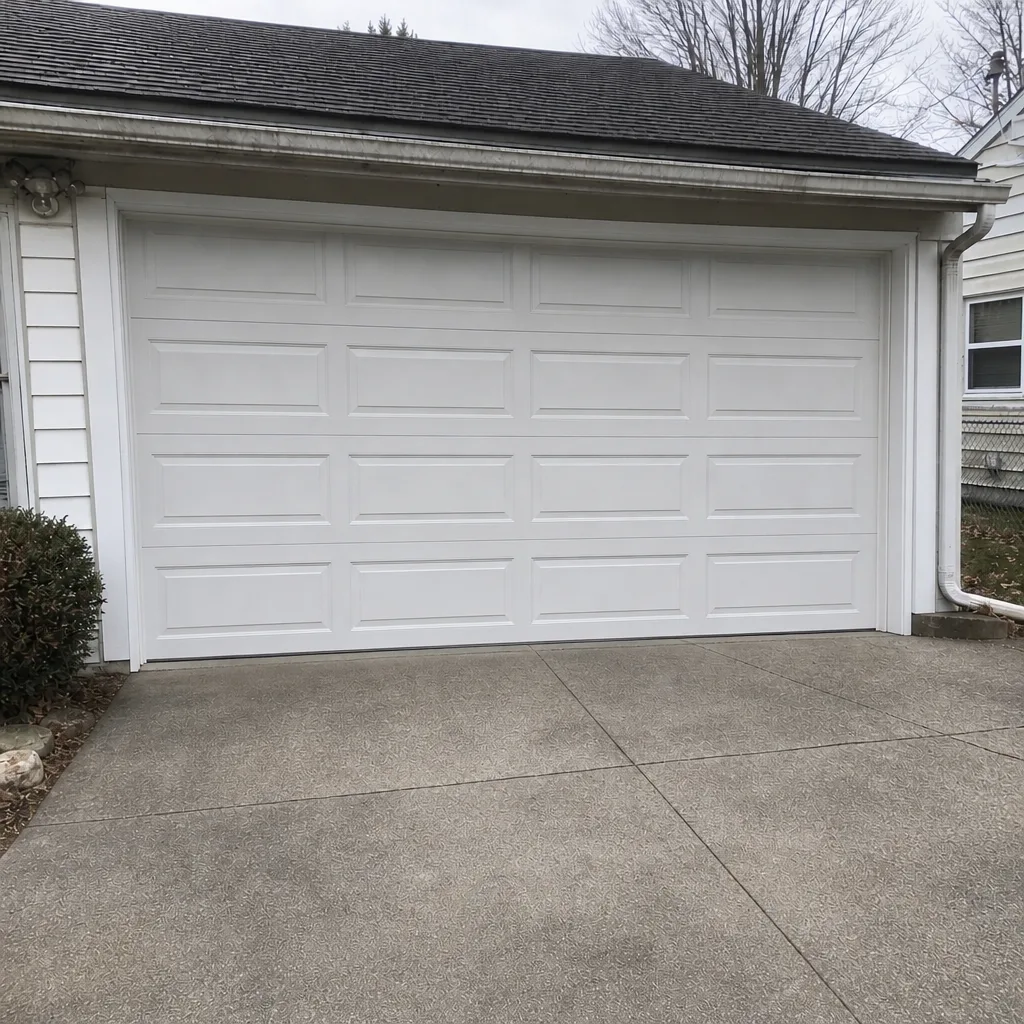 After
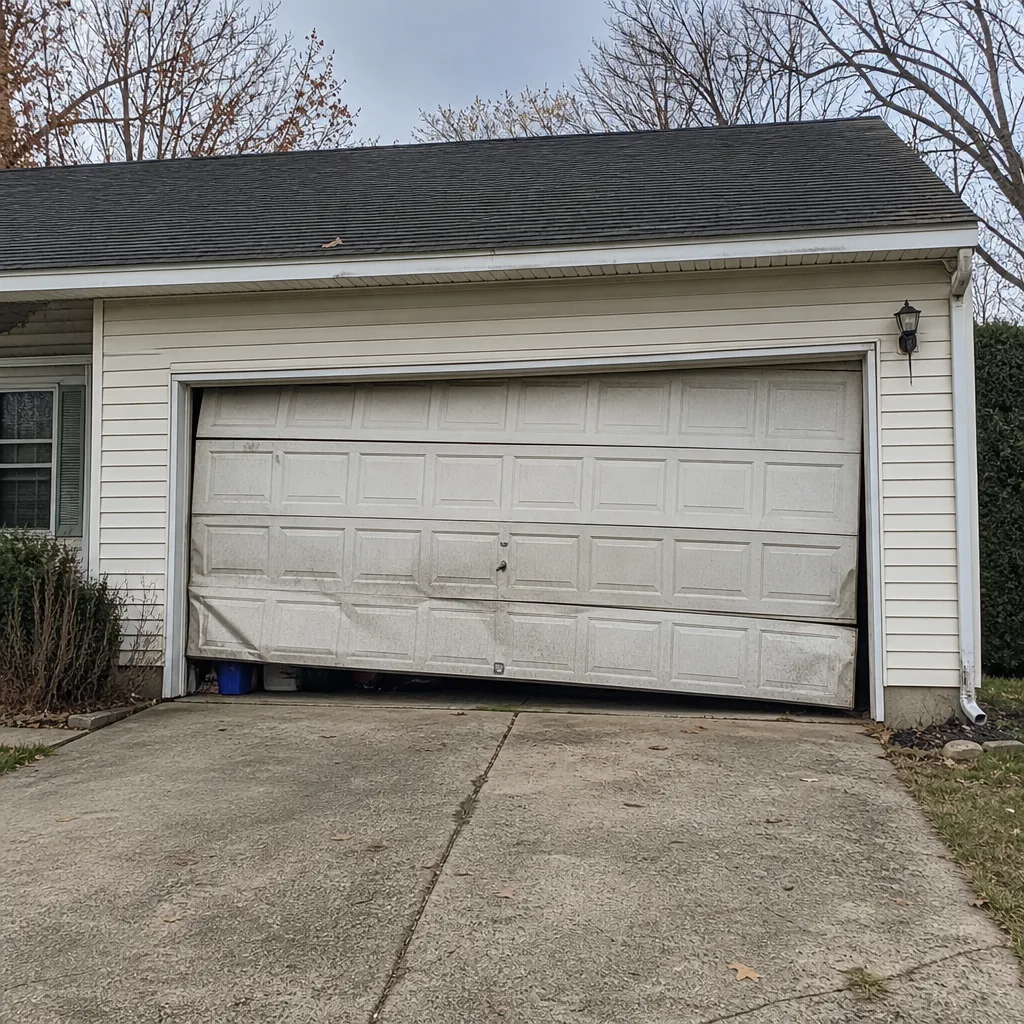 Before
 After
When to Call a Professional
Some garage door problems are worth watching. Others need a technician. The line is usually drawn at anything involving the springs, cables, or a door that’s lost its balance – those are the components that can hurt someone, and they’re the ones a trained professional handles with the right tools. If your door is stuck, won’t stay up, makes a sudden bang, or has a visible gap in the spring, it’s time to stop using it and call. Worn rollers, noisy hinges, and a squeaky track can wait for a scheduled visit, but they’re still worth fixing before they compound. When your door won’t move, we do: Garage Door Repair Mount Laurel offers free estimates in Mount Laurel – call (844) 292-9001.
Frequently Asked Questions
The earliest signs are usually a door that’s gotten heavier or slower, unusual grinding or scraping noises, uneven movement, and visible wear on springs or cables. A door that won’t stay up on its own or reverses unexpectedly is further along and should be serviced soon. If you notice any of these, it’s worth having a technician take a look before it becomes a red sign.
No. A snapped spring means the door has lost its counterbalance, and it should not be operated automatically or manually until it’s repaired. The door may be much heavier than it looks, and running it risks injury and can damage the opener. Call a technician and leave the door as it is.
An uneven door is almost always a cable or spring problem, not an opener problem. The springs carry the door’s weight and the cables transfer that tension to each side. When one side loses tension, the door rises crooked. The opener is just moving whatever weight it’s given, so replacing it won’t fix an uneven door. It needs a diagnosis first.
A quick visual check every few months is worth doing, and a professional service visit once a year is a sensible habit. The seasonal swings here – the first cold snap of winter and the humidity of summer – are when most components weaken most. Between visits, watch for the yellow and red signs in this guide and note anything new.
A loud bang from the garage is most often a torsion spring breaking. Stop using the door. Look (from a safe distance) for a visible gap in the spring above the door or a hanging cable. Don’t attempt to lift or force the door – call a technician to inspect it. A broken spring is a safety issue, not a DIY repair.
Very likely. We work on the major residential brands, including LiftMaster, Chamberlain, Genie, Clopay, Amarr, Wayne Dalton, Craftsman, and Raynor. Brand-specific knowledge matters because it means faster diagnosis and the right parts. If your door or opener is one of the common brands sold in the area, we can help. Call (844) 292-9001 for a free estimate.
The Bottom Line
Garage doors almost never fail without warning. The spring that snaps usually sounds or feels wrong first. The cable that lets go usually looks frayed. The track that’s misaligned usually scrapes. What separates a small repair from a dangerous failure is whether the homeowner recognized the sign in time. Use the three-tier system as your guide: green means monitor, yellow means schedule, red means stop. A 90-second visual check every few months catches most problems early, and if anything on the red list shows up, don’t run the door – call a technician. Whether it’s a spring, opener, panel, or a full door, a trained professional can get it back in working order. For garage door repair in Mount Laurel, we’re here to help when the signs say it’s time.
Contact
If anything in this guide matches what your door is doing, don’t wait for it to get worse. Call Garage Door Repair Mount Laurel at (844) 292-9001 for a free estimate. Our technicians have up to 9 years of experience, and we offer free estimates to homeowners in Mount Laurel. Whether it’s a routine spring inspection, an exact quote for garage door spring repair, or a diagnosis of a door that’s not moving right, we’ll tell you what’s happening, what it takes to fix it, and what it will cost before any work starts. The price is quoted and agreed before we begin. When your garage door won’t move, we do.
Written by the team at Garage Door Repair Mount Laurel.